
Dr Mario Walkthrought
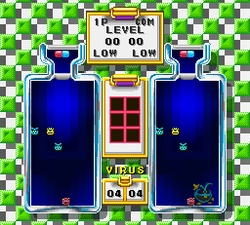
Let’s cut to the chase: Dr. Mario on SNES — the same Doc Mario we tossed around with friends — absolutely shines in the Tetris & Dr. Mario compilation. We’ve already covered the basics and controls in the gameplay, and bits of the story in the history. Here it’s all about the clear: where to drop capsules, how to unwind jams, and what to do at top speed so you can smoothly clean the “bottle” up to level 20.
Pre-game setup
Set virus level for the goal: 5–8 to warm up, 10–14 for a serious run, and 17–20 for “how to clear on max.” Start on Medium and switch to High once the rhythm and auto-rotation are in your fingers. Music isn’t just flavor: Fever keeps your cadence, Chill helps you focus. In Flash mode the win condition changes: erase the flashing viruses faster than your rival or the clock, so configure for tunnels and surgical strikes.
Early game (0–10): lay the foundation
First, free the bottle’s neck — top space decides everything. Don’t rush fancy chains: your job is safe clears. Place two-color capsules so the “off” half slides into a side trash column — pick one edge, usually left, and feed junk there as vertical stacks. For a virus in the open, go vertical: land the needed color right above it and park the other half to the side. If a virus is tucked in a corner, approach horizontally but leave a step for the next move so you don’t seal the corner with a flat roof.
If there’s a “ledge” hanging over a virus, don’t smash it right away: carve a skinny chute by packing verticals tight — leave a one-cell gap for precision drops. A great low-level habit is building “primed triples”: three in a row with room for the fourth, so one half clears the virus and kicks off a safe mini-chain. This isn’t about showy cascades — it’s about reliability and control.
Midgame (11–16): managing rubble
When viruses hide under layers, play from “shafts”: cut vertical wells from the top down to your target. Turn any flat roof into steps immediately — offset capsules by one cell to keep an entry point. Don’t chase a color that isn’t spawning: if you’re waiting on yellow but see blue/red, park them in your trash column without raising the board. Misdrop? Rotate and “park” the extra half on the side stack — two moves to fix beats choking the neck.
SNES Medium/High calls for short spins at the mouth. Train the late rotate: as you skim a step, twist so the needed color snaps to the platform while the other half slips past. That’s your bread-and-butter against dense piles. If two viruses are stacked, build an L support: first a horizontal that passes the top one with its “low” half out, then a vertical down the well to the lower target.
Endgame (17–20 High): survive without tilting
Here, every mistake is almost a top-out. Mark an “emergency exit” immediately — one clean column to the neck. Pop the tallest viruses first, especially by the wall: the top row is a lid, don’t seal it. For narrow plugs, work “pop the lid, then the target”: first a half-capsule to remove the roof, then a pinpoint vertical on the virus. When the field is rainbowed with three colors, alternate your trash dump: two–three throws left, then right, so one side doesn’t climb too high.
On High, the beat sets the pace. Take the minimal route: one rotate, one tap. If a sequence is building a flat platform at the mouth, immediately “stagger the capsule” — drop it one block higher/lower, even if it kills a combo. The win here is flawless stacking and surgical hits on strays. The “how to clear level 20” plan is simple: keep two channels open, favor verticals, and only play a horizontal when it deletes a virus right now.
Flash mode: blinking targets on a timer
Flash flips the script: everything else is noise. From the neck, cut a well straight to the nearest blinker. If the color won’t show, don’t panic — build slim stair-steps that don’t block the entry. With one blinker left, it’s worth a couple setup moves: stage a small platform at its height and thread the right half cleanly through the window. Decisions beat greed here — a neat single often wins the clock over a risky chain.
2P duel: pressure with pace and garbage
In Dr. Mario versus a human, garbage rains on your rival when you clear multiple viruses in one drop or trigger chains. To “sprinkle” consistently, keep a couple of primed triples in different colors. Two viruses with one touch gives a small packet; three or more sends a real shower. Your best weapon is the quick double: first a horizontal to cap one virus, next drop finishes the second in the same column. Keep the stack low and the neck clean — counter-garbage is easier when there’s headroom. Set the music to Fever — in duels, rhythm keeps you from burying yourself.
Untangling common messes
One virus by the wall under a lip: first make a one-cell step beside it, then drop a vertical to tuck the right color under the overhang. Two viruses with a gap: build a “hook” — a horizontal so one half forms a bridge, then a vertical to finish the lower one. Tall trash “mountain” in the middle: slice it on the diagonal — alternate verticals into the left and right flanks to carve a V-shaped lane. Misdrop sealed the entry? Rotate the next capsule so the off-color lands on the top edge of the plug, then immediately pop it with the right half.
If it feels like colors aren’t coming, play patient: funnel extras into side columns and prep anchors for either of the two rarest colors. That’s the practical “anti-virus” plan on SNES: minimal flat roofs, maximum lanes downward, tidy chains without risk. It’s how you beat nasty seeds at high speed — no drama.
And yes, Tetris & Dr. Mario has Mixed Match: if you’re running sets with friends, close Dr. Mario businesslike — no stalling. A quick wedge on the blinkers in a Flash round saves minutes and knocks your opponent off rhythm — a small secret of big wins.
These tips aren’t “magic” combos, but working solutions for how to beat Dr. Mario on SNES. Get comfy with the tempo, drill short spins at the neck, keep a cool head. The bottle will yield — quietly, cleanly, like a pro.